One Post, Four Platforms, Zero Results: Why Your Content Strategy Is Working Against You
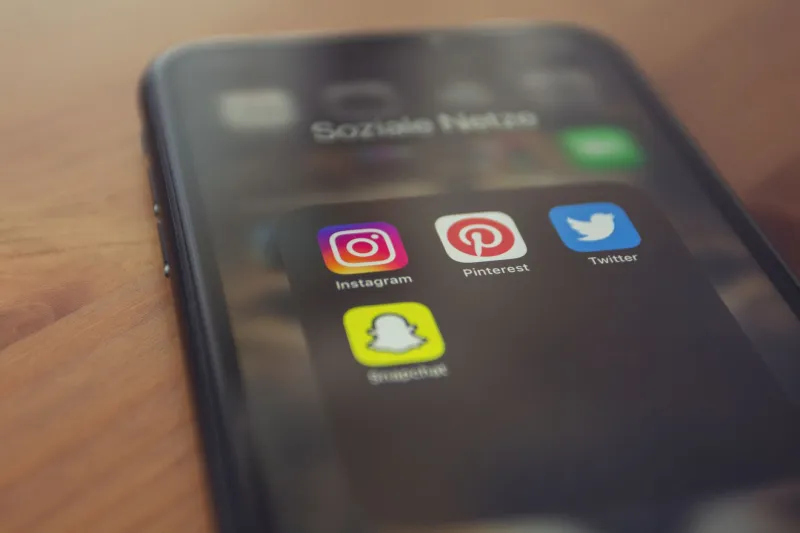
There's a particular kind of exhaustion that hits social media managers around mid-afternoon on a Tuesday. The content calendar is full, the posts are scheduled, and everything looks tidy on paper. The problem? That LinkedIn article just went out word-for-word on Instagram. The TikTok video was a portrait-cropped version of a YouTube clip. And the X post is a paragraph nobody has time to read.
This is the social media lag — and it's costing UK brands far more than they realise.
What We Actually Mean by Platform Confusion
Platform confusion isn't about using the wrong hashtag or posting at the wrong time. It's something more fundamental. It's treating social media channels as interchangeable delivery pipes when they're actually very different rooms full of very different people in very different moods.
LinkedIn users are in professional mode. They're skimming between meetings, looking for insight that makes them feel informed or validated in their career choices. Instagram users are in a visual, often aspirational headspace — they want to feel something. TikTok's audience is there to be entertained, and they'll make up their minds about your brand in roughly 1.3 seconds. X (formerly Twitter) is a conversation platform that rewards wit, brevity, and timeliness above almost everything else.
When you fire the same piece of content at all four simultaneously, you're essentially showing up to a black-tie dinner, a Sunday barbecue, a comedy club and a boardroom meeting wearing exactly the same outfit. You might technically be present. But you're not connecting.
The Hidden Costs Nobody Talks About
Most brands focus on vanity metrics when they evaluate content performance — reach, impressions, follower counts. But the real damage from platform-blind content strategies lives in less obvious places.
Wasted creative spend. If a well-produced video performs poorly because it wasn't optimised for vertical viewing or captioned for sound-off scrolling, that production budget might as well have been spent on biscuits for the office.
Algorithmic penalties. Platforms are increasingly sophisticated at detecting content that feels native versus content that's been dumped there. Low early engagement signals — often caused by mismatched content — can suppress your reach across an entire account, not just a single post.
Audience erosion. Followers who consistently see content that doesn't feel right for the platform they're on will simply start ignoring you. And an ignored brand is a brand paying to be invisible.
A Manchester-based retail brand we're aware of ran the same promotional campaign across all channels for three months before auditing their results. Their LinkedIn posts were generating genuine leads. Their Instagram content was being saved and shared. But TikTok? Near zero traction — because nobody had adapted the content for how that audience actually consumes information. Three months of wasted effort on one channel, simply because the team assumed what worked elsewhere would travel.
The Audit You Probably Haven't Done
Before you can fix platform confusion, you need to diagnose it honestly. Here's a simple framework for auditing where your strategy is actually breaking down.
Step one: Pull platform-specific performance data separately. Not blended. Not averaged. Each channel in isolation. Look at saves, shares, comments and click-throughs — not just likes and reach. These are the signals that tell you whether content genuinely landed.
Step two: Review your last 30 pieces of content and ask one question per post. Does this feel like it was made for this platform, or made for somewhere else and posted here? Be brutal. If the answer is the latter more than a handful of times, you've found your problem.
Step three: Map your audience intent per platform. What is someone on LinkedIn hoping to get from your brand? What about on Instagram? Write it down. If you can't answer that question clearly, your content team probably can't either.
Step four: Check your format diversity. Are you using native features — LinkedIn carousels, Instagram Reels, TikTok Duets, X threads? Native formats consistently outperform cross-posted content because platforms actively promote content that keeps users on-site.
What Cracking the Code Actually Looks Like
A London-based B2B software firm spent a year treating all their social channels as one. Engagement was flat, pipeline from social was negligible, and their team was burning out producing content that felt like it was going nowhere.
They restructured around a simple principle: one core message per campaign, expressed four different ways. LinkedIn got a long-form thought leadership angle — data-heavy, professionally framed. Instagram got the human story behind the product, told through employee spotlights and customer moments. TikTok got short, punchy explainers that leaned into humour and relatability. X got real-time commentary on industry news that tied back to their expertise.
Same campaign. Four distinct executions. Engagement across every channel improved within six weeks. More importantly, each platform started doing what it's actually supposed to do — LinkedIn drove inbound enquiries, Instagram grew brand affinity, TikTok brought in a younger demographic they hadn't reached before, and X positioned them as credible industry voices.
That's not a miracle. That's just respecting the room you're in.
Building a Smarter Content Architecture
The fix isn't hiring four separate content teams or quadrupling your production budget. It's about building a smarter architecture around your existing resources.
Start with your content pillars — the three or four themes your brand consistently speaks to. For each pillar, brief your team to think in platform-native terms from the outset. Not "we're making a video" but "we're making a TikTok" or "we're making a LinkedIn carousel." The distinction matters enormously when it comes to scripting, pacing, format and tone.
Build in a brief platform check before anything goes live. One question: does this feel native here? If not, it doesn't go out until it does.
And revisit your channel strategy quarterly. The platforms themselves are changing constantly — what worked on Instagram eighteen months ago may be actively suppressed now. Staying current isn't optional; it's the baseline.
The Bottom Line
Social media isn't one thing. It's several very distinct things that happen to live on your phone. UK brands that treat it as a single channel will keep wondering why their content isn't working, while brands that understand platform nuance will keep pulling ahead.
The social media lag is real — but it's entirely fixable. The first step is simply acknowledging that your audience on TikTok is not the same person as your audience on LinkedIn, even if they both follow your brand. Speak to them accordingly, and you'll be surprised how quickly the numbers start to move.
At 5Social, we help UK brands untangle exactly this kind of platform confusion — turning scattered content efforts into coherent, channel-smart strategies that actually build something. If your content calendar looks busy but your results feel flat, it might be time for a proper audit.